


What Is a Track Intrusion Detection System?
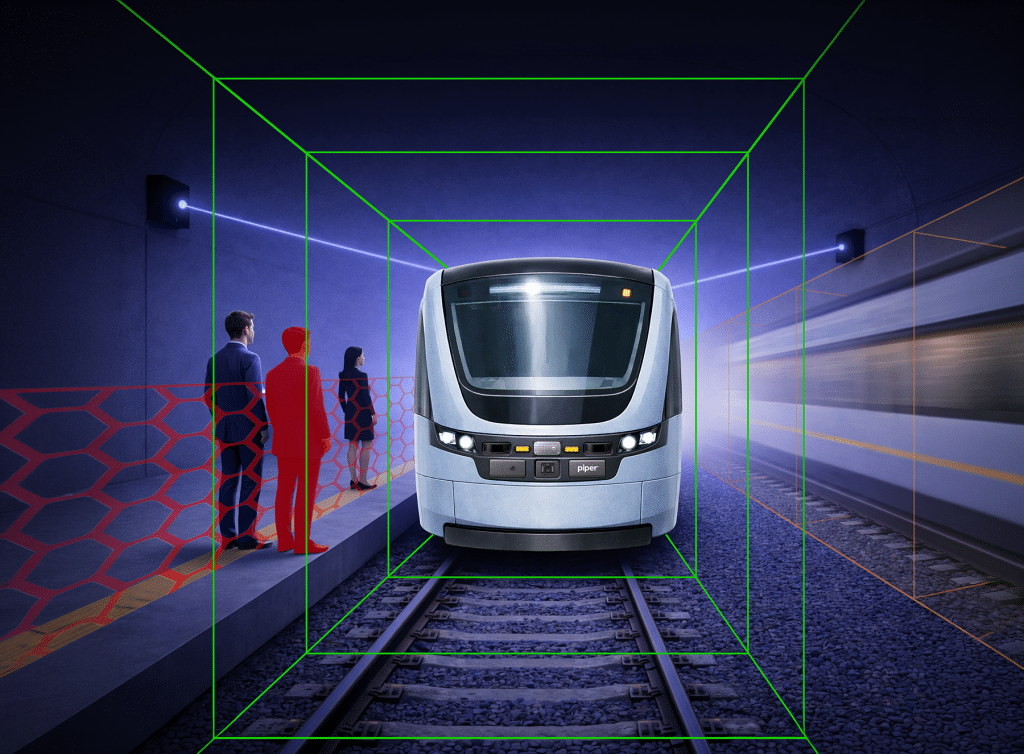
A Track Intrusion Detection System (TIDS) is a wayside safety system installed at passenger rail and subway stations to automatically detect when a person, animal, or object enters the track fouling area — the zone immediately adjacent to the rail where a collision with an approaching train is possible. When an intrusion is detected, the system alerts train operators, station control centers, and passengers simultaneously, with sufficient time for a safe response. Piper’s StandClear™ is a TIDS purpose-built for subway and light rail stations. It uses two complementary sensor technologies — patented TrackSight™ LiDAR and proprietary Time of Flight (ToF) sensors — to provide continuous, real-time monitoring of the platform edge, the track fouling area, and tunnel entrances.
The Problem StandClear™ Solves
Every day, passengers at rail and transit stations face a risk that cannot be fully eliminated through signage, barriers, or staff presence alone — the risk of falling, being pushed, or walking onto the track. For train operators, the challenge is equally serious: by the time a hazard in the fouling area is visible from the cab, stopping distance is often insufficient.
The risk extends beyond the moment of intrusion. Passengers leaning toward the track, erratic movements on a crowded platform, or sudden crowd displacement near the platform edge are all precursors to serious incidents — and most detection systems cannot recognize them. CCTV monitored by staff depends on sustained human attention and cannot consistently detect pre-intrusion behaviors. Basic proximity sensors detect only what has already entered the fouling area.
StandClear™ addresses the full spectrum: a safety-certifiable geometric foundation that detects genuine boundary breaches with no nuisance alarms, combined with AI-enhanced machine learning that recognizes and classifies pre-intrusion behaviors before they escalate.
How Piper’s StandClear™ Works
Two Complementary Sensor Technologies
StandClear™ combines two sensor systems that together provide seamless coverage of the full platform environment.
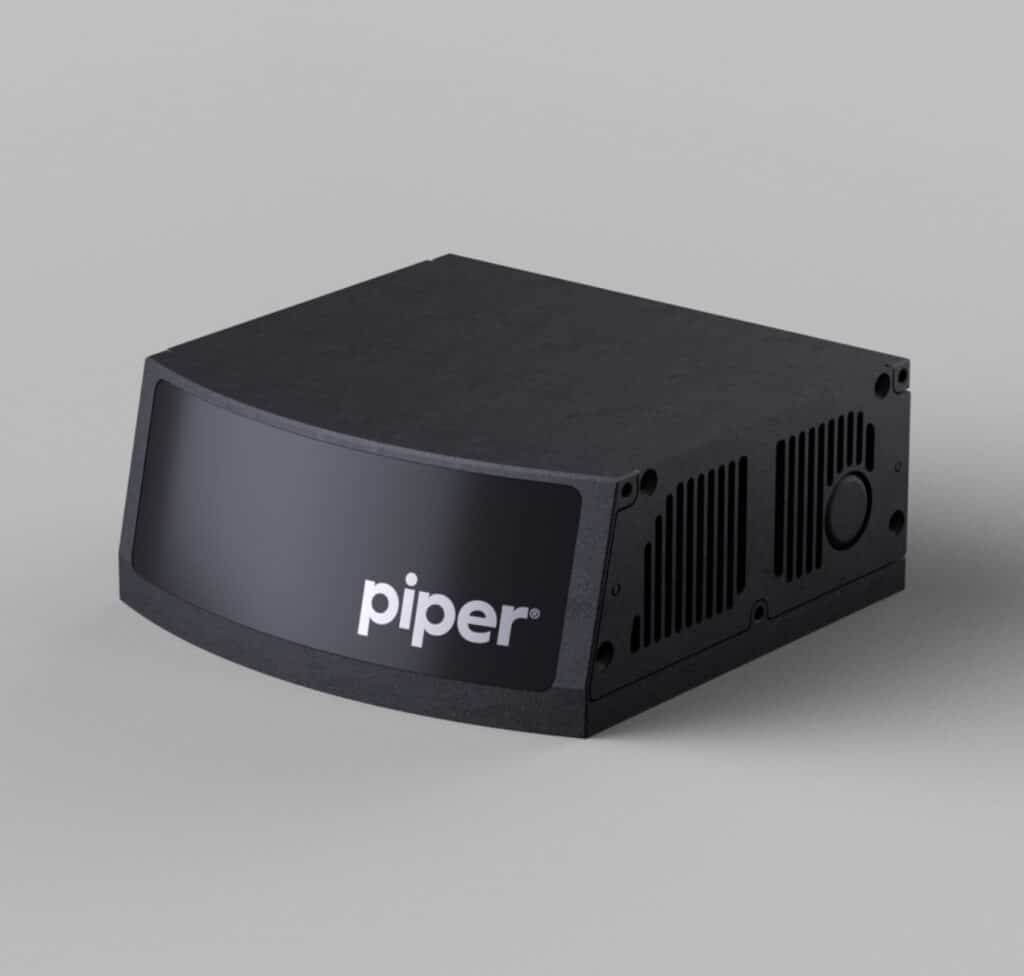
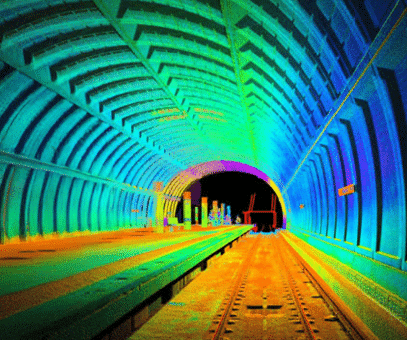
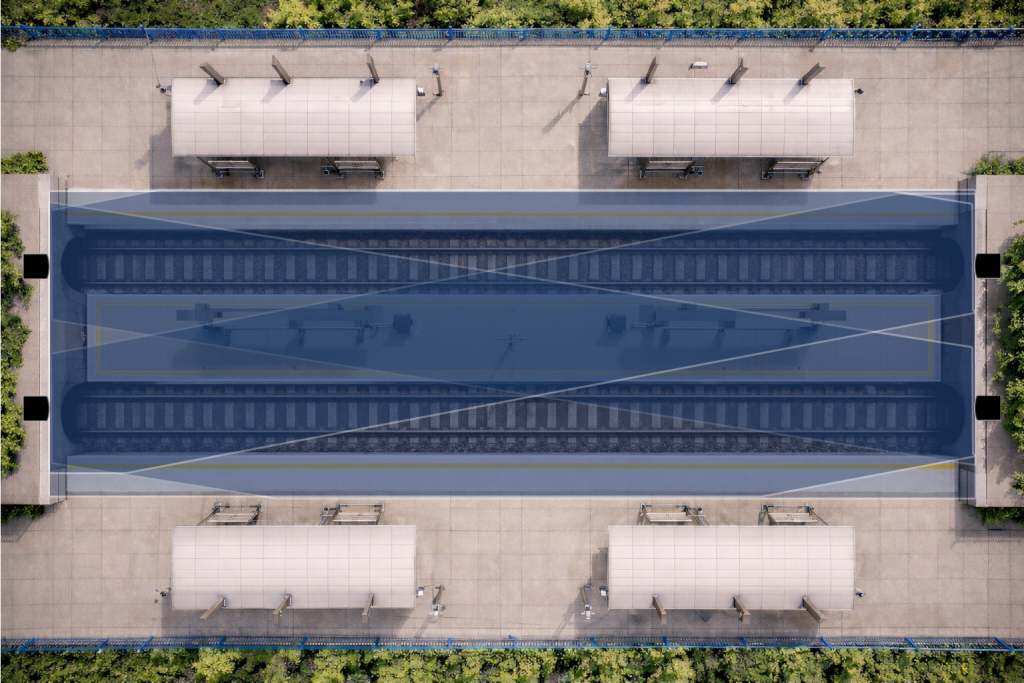
TrackSight™ LiDAR sensors are mounted at the ends of platforms, facing down the tunnels and along station tracks. They detect any object larger than 1 cubic meter at distances up to 100 meters, covering tunnel approaches well beyond the immediate platform area. TrackSight™ operates on reflected laser pulses, making it immune to headlights, darkness, and visual spectrum interference. Piper’s TrackSight™ LiDAR is SIL-4 safety certifiable and is in the process of being certified.
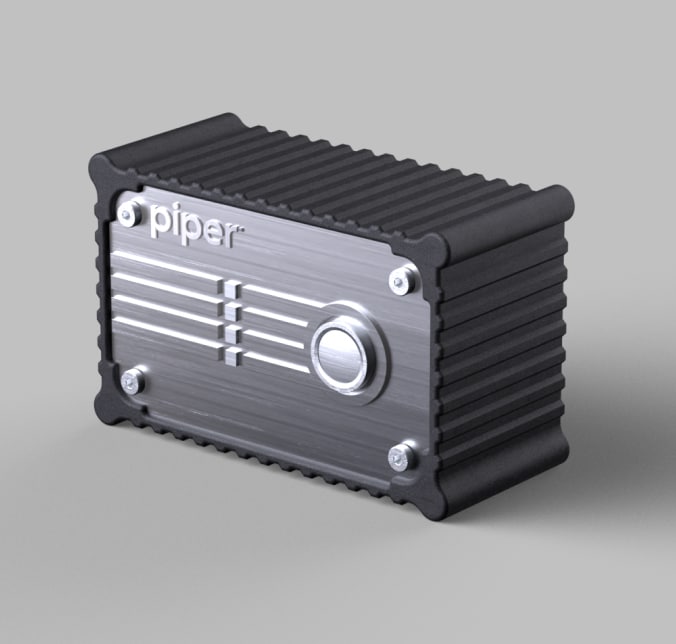
Time of Flight (ToF) sensors are ceiling-mounted above platform edges, facing downward. They detect hazards at the platform edge with a range of up to 16 meters. Because ToF technology measures distance using the round-trip time of reflected light signals — rather than analyzing visual images — it operates effectively in complete darkness, is unaffected by shadows and lighting changes, and requires no AI training data. Ceiling-mounted ToF sensors eliminate sun glare entirely by design, and can detect intrusions between berthed trains — a coverage gap in single-sensor LiDAR-only systems.
The Virtual Tunnel
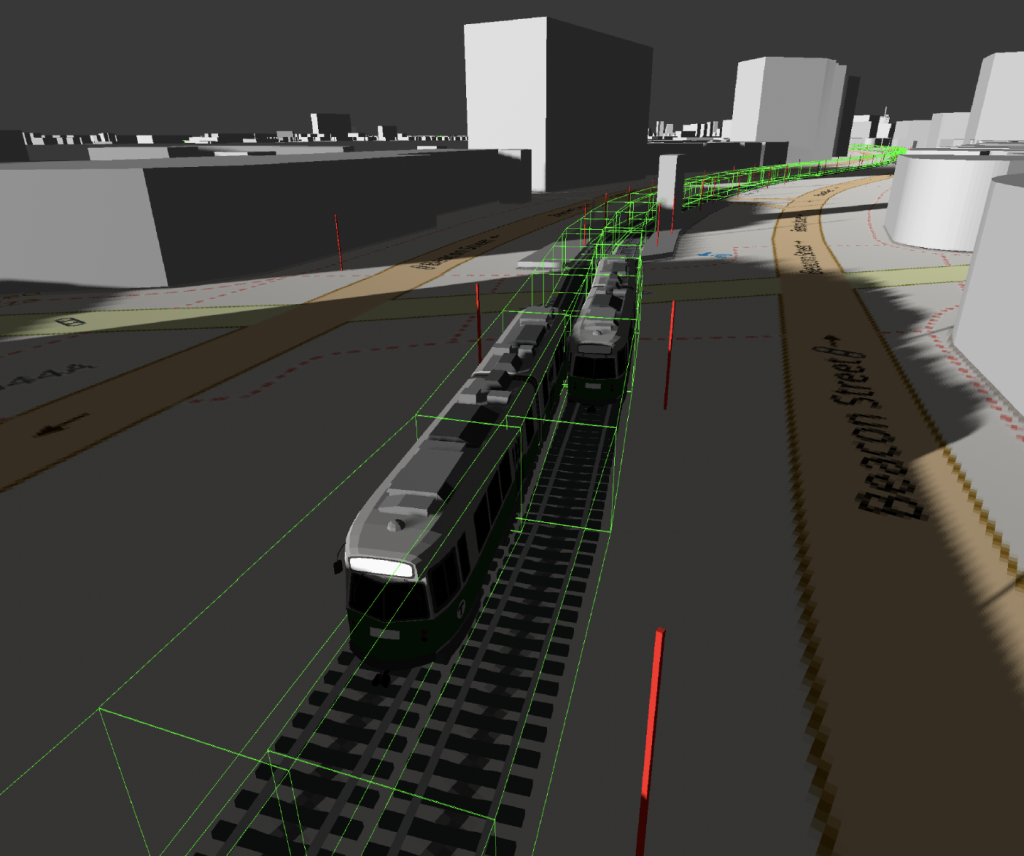
Both sensor systems operate within Piper’s proprietary Virtual Tunnel framework — a digital model of the track’s dynamic clearance envelope, constructed from a survey of the station geometry. Virtual Tunnels are built as strings of polyhedrons along the centerline spline of the track, calibrated to the operator’s specific requirements.
The Virtual Tunnel defines precisely where intrusion alerts should and should not be generated. Because the system responds only to genuine breaches of the fouling area boundary — and never to pattern matches or learned inferences — nuisance alarms are eliminated by design. There is no configuration tuning required to suppress false positives. The system operates with a duty cycle of 100 milliseconds, with any latency confined to the communications channel rather than the detection logic itself.
Deterministic and AI-Enhanced Detection
StandClear™ combines a deterministic geometric foundation with AI-enhanced behavioral intelligence. At its core, the system compares real-time sensor data against the Virtual Tunnel geometric model — a fixed boundary check that is inherently auditable, SIL-4 safety certifiable, and consistent from commissioning day with no training period. Built on top of this foundation, StandClear™’s machine learning layer extends detection beyond boundary breaches to recognize and classify pre-intrusion behaviors: passengers leaning toward the ROW, erratic movements, crowd displacement, and unusual platform density patterns. Event classification drives the alert response — determining the appropriate notification level, contextual information, and escalation path delivered to train operators, station staff, and control center personnel. The system continuously improves its classification accuracy based on operator feedback. The result is a system that is both safety-certifiable at its core and adaptive in its intelligence.
What StandClear™ Detects
StandClear™ detects and responds to the full range of track intrusion scenarios at passenger stations:
- Platform edge approach — passengers getting too close to or crossing the platform edge
- Platform falls — accidental falls from the platform onto the track, detected immediately
- Deliberate intrusions — malicious or deliberate track intrusions triggering immediate operator alert
- Object detection — luggage, equipment, and debris in the fouling area, flagged with sufficient stopping distance
- Tunnel entrance intrusions — covered by TrackSight™ LiDAR beyond the platform end
- Animate and inanimate discrimination — the system reliably distinguishes people and animals from objects, enabling proportionate alert responses
Alerts and Integration
When StandClear™ detects a hazard, it communicates simultaneously through multiple channels to ensure the appropriate parties are notified with sufficient time to act:
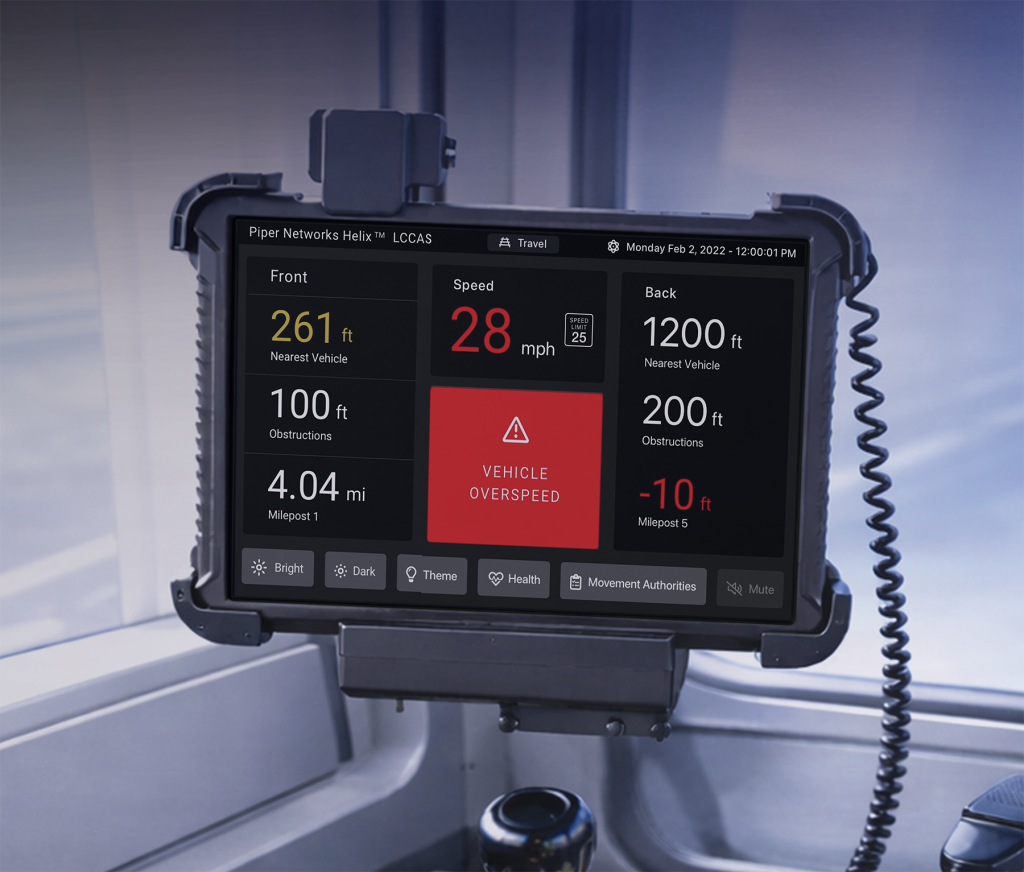
- Train operator — direct alerts to the Piper Vehicle Operator Display (VOD) in the approaching train cab
- Right of way — visible signals and strobes visible to the approaching train operator
- Track lighting — integration with track lighting systems for platform-wide visual warnings
- Passenger alerts — targeted audible warnings and LED light pipe alerts to passengers in encroaching areas
- Train control — communication link into the train control system for automated responses
- Data and analytics — all sensor and telemetric data stored securely for forensic analysis and incident review
Installation and Integration
StandClear™ is designed for installation into existing station infrastructure without requiring major civil works.
ToF sensors mount on ceilings above platform edges using standard wayside power — typically 110 volts or 277 VAC. TrackSight™ LiDAR sensors are positioned at platform ends. A station survey is required to build the Virtual Tunnel database prior to commissioning. Communication between sensor devices and the operator network is supported via Ethernet, LTE, or Wi-Fi, with an option for an on-premises secure closed copper connection. An API for Operations Control Center (OCC) integration is included.
StandClear™ can operate as a standalone system or integrate directly into existing train control and station management infrastructure. A cloud-based administration platform monitors all components, with Over-the-Air (OTA) remote management for maintenance and software updates.
Piper is both the technology developer and the systems integrator, with experience deploying proven solutions at major US transit agencies including Amtrak and the MTA New York City subway system.
Performance and Reliability
All-condition operation. TrackSight™ LiDAR operates on reflected laser pulses — inherently immune to headlights, darkness, and visual spectrum interference. ToF sensors eliminate sun glare entirely through ceiling-mounted, downward-facing installation. Both sensors detect intrusions while trains are entering or leaving the station. For conditions where environmental factors such as fog, tunnel dust, or precipitation may affect optical performance, Piper’s proprietary software mitigation maintains detection reliability within the defined Virtual Tunnel boundaries.
Proven field record. No anomalous failures have been reported across 600 railbound vehicles operating for 3.5 years in the Northeast Corridor using Piper’s TrackSight™ LiDAR platform. Piper’s FRACAS process — Failure Reporting, Analysis, and Corrective Action System — ensures ongoing maintenance tracking and systematic performance data extraction across all deployed installations.
Part of the proven Piper platform. StandClear™ uses the same TrackSight™ LiDAR hardware deployed across Piper’s Vital Train Positioning platform — in revenue service at Amtrak and other major US operators. The same sensing technology that keeps trains positioned with centimeter accuracy keeps passengers safe at platform edges.
Standards and Certifications
| Standard | Status |
| CENELEC SIL-4 | Piper’s TrackSight™ LiDAR is SIL-4 safety certifiable and is in the process of being certified — Safety Integrity Level 4, the highest standard in the rail industry. |
| AEC-Q100 | Piper’s LiDAR sensors are AEC-Q100 certified for use in transit and automotive applications. |
| AREMA / IEEE | Compliant with AREMA and IEEE standards for railway signaling and safety systems. |
Frequently Asked Questions
What is a Track Intrusion Detection System (TIDS)? A Track Intrusion Detection System (TIDS) is a wayside safety system that automatically detects when a person or object enters the track fouling area at a passenger rail station and alerts train operators and station control in real-time.
How is StandClear™ different from AI-based intrusion detection systems? StandClear™ is fully deterministic — it compares live sensor data against a fixed geometric model of the track fouling area rather than using AI or machine learning. This means there is no training data period, performance is consistent from commissioning day, and the system is SIL-4 safety certifiable. AI-based systems cannot currently achieve SIL-4 certification.
What sensors does StandClear™ use? StandClear™ uses two complementary sensor technologies: Piper’s patented TrackSight™ LiDAR, mounted at platform ends for long-range detection up to 100 meters, and Piper’s proprietary Time of Flight (ToF) sensors, ceiling-mounted above platform edges for short-range detection up to 16 meters.
Does StandClear™ generate false alarms or nuisance alarms? No. Because StandClear™ uses geometry-only detection — responding only to genuine breaches of the Virtual Tunnel boundary — nuisance alarms are eliminated by design. The system does not generate alerts from pattern mismatches or unfamiliar objects. No configuration tuning is required to suppress false positives.
What is the Virtual Tunnel in StandClear™? The Virtual Tunnel is Piper’s proprietary digital model of a station’s track clearance envelope, built from a geometric survey of the station. It defines precisely where intrusion alerts should be generated, ensuring the system responds only to genuine fouling area hazards with no image processing latency.
Is StandClear™ SIL-4 certified? Piper’s TrackSight™ LiDAR is SIL-4 safety certifiable and is in the process of being certified — SIL-4 is the highest Safety Integrity Level defined by the CENELEC rail safety standard.
Can StandClear™ operate in darkness, fog, or rain? Yes. TrackSight™ LiDAR operates on laser pulses and is immune to headlights, darkness, and visual interference. ToF sensors eliminate sun glare by design. Piper’s software mitigates detection in adverse conditions including fog, dust, and precipitation.
What transit agencies use Piper’s TrackSight™ LiDAR? Piper’s TrackSight™ LiDAR is deployed in revenue service at Amtrak and other major US rail operators — with no anomalous failures reported across 600 railbound vehicles operating for 3.5 years in the Northeast Corridor.
How does StandClear™ alert train operators? When a hazard is detected, StandClear™ sends simultaneous alerts to the Piper Vehicle Operator Display (VOD) in the approaching train cab, generates visible right-of-way signals and strobes, integrates with track lighting, communicates with the train control system, and triggers targeted passenger warnings on the platform.
What is the detection range of StandClear™? TrackSight™ LiDAR detects a 1 cubic meter object at up to 100 meters. Time of Flight sensors cover the platform edge at up to 16 meters. Together they provide continuous, gap-free coverage of the full platform environment and tunnel entrance.